Iran Pushes Back: Stunning US Clash in Region


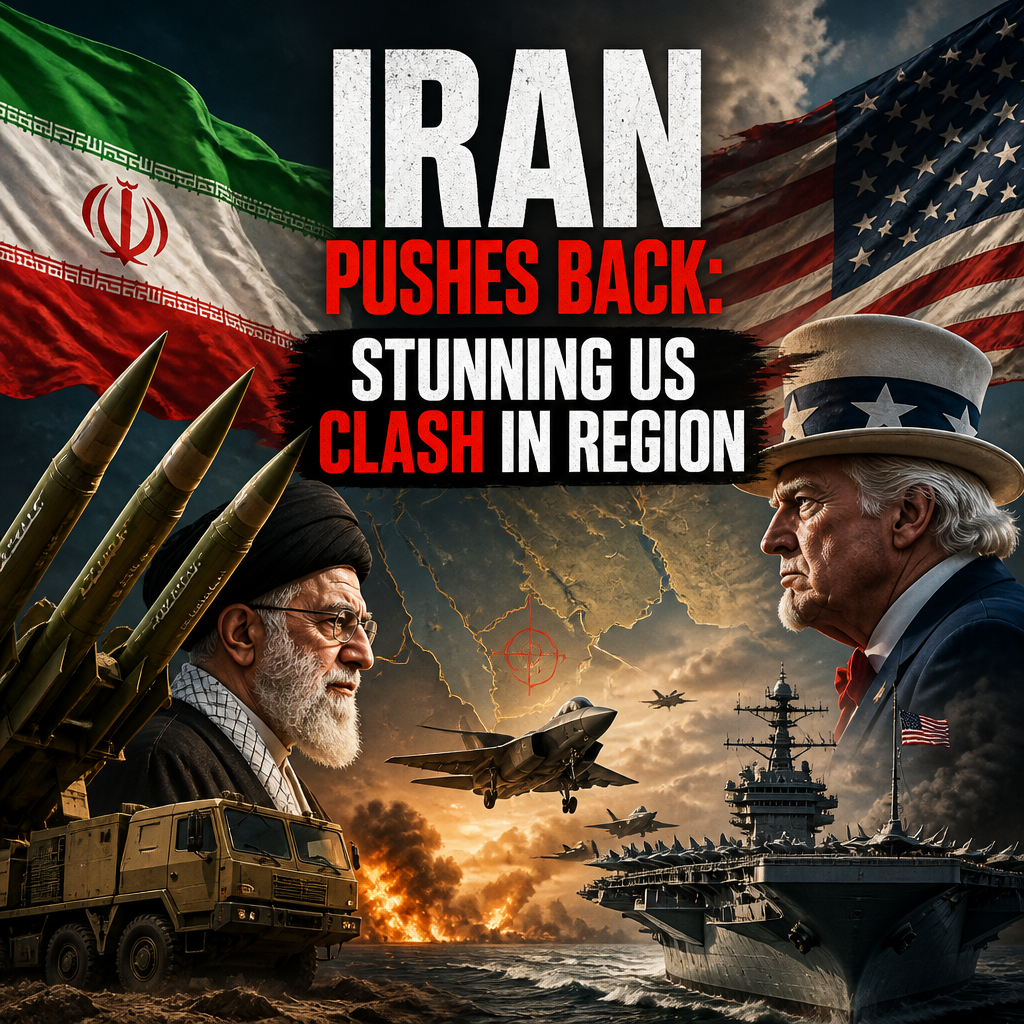
Iran pushes back as tensions with Washington and its regional allies continue to rise, and the latest round of headlines shows just how quickly a local flare-up can become a wider strategic confrontation. What stands out in the reporting from different outlets is not just the sharpness of the exchange, but the fact that each side is telling a very different story about who is escalating, who is defending itself, and what the next move could mean for the wider Middle East.
A region on edge, with competing claims of self-defense
At the center of the dispute is a familiar but volatile pattern: Iran portrays its actions as a response to pressure, strikes, and encirclement, while the United States and its partners frame their moves as deterrence, protection, and freedom of navigation. Al Jazeera’s coverage emphasizes how regional tensions have intensified against the backdrop of broader conflict dynamics, with Iran pushing back against American influence and military posturing. That framing matters because it highlights an important point often lost in fast-moving coverage: neither side sees itself as the aggressor.



Sky News’ reporting tends to focus more on the operational and diplomatic consequences of these clashes, especially how quickly incidents involving US forces, allied militaries, or Iran-linked groups can disrupt shipping lanes, heighten security alerts, and increase the risk of miscalculation. That perspective underscores the practical reality for the region: even when leaders speak in strong political language, the immediate fallout is felt by civilians, traders, and governments trying to avoid a broader war.
RT’s coverage, meanwhile, usually leans toward a more skeptical view of Washington’s role, portraying US involvement as part of a longer pattern of intervention and pressure. From that angle, Iran’s pushback is not simply an isolated confrontation but a reaction to years of sanctions, military presence, and what Tehran sees as destabilizing Western policy. While readers should treat any state-adjacent framing carefully, it is still useful as a reminder that the conflict is not happening in a vacuum.




Iran Pushes Back: what each side is trying to achieve
The phrase Iran pushes back captures more than a single incident; it reflects a broader contest over leverage. Iran wants to signal that it cannot be boxed in without consequences. The United States, on the other hand, wants to prove that attacks on its personnel, assets, or allies will carry a cost. That creates a dangerous logic where each response is designed to restore deterrence, but may instead invite a larger retaliation.
The crucial question is whether the current cycle is still manageable or whether it is slipping beyond control. So far, the reporting suggests a few consistent themes:
– Iran is trying to demonstrate resilience despite economic sanctions and diplomatic isolation.
– The US is seeking to maintain deterrence without becoming drawn into a new regional war.
– Regional actors are caught in the middle, worried that escalation could hit energy routes, ports, and domestic stability.
– Public messaging is as important as military action, with both sides using media narratives to shape perceptions.
This is where the three sources offer useful contrast. Al Jazeera gives the most explicit sense that this is part of a larger confrontation involving Gaza, proxy networks, and a broader anti-US posture in the region. Sky News is more inclined to translate the confrontation into immediate risk terms: more alerts, more military readiness, and more pressure on diplomatic channels. RT places the conflict in a geopolitical frame, suggesting the US is overreaching and that Iran is responding to external coercion. Taken together, they do not produce one neat conclusion, but they do show why the story is so hard to reduce to a simple “attack and response” narrative.
Why the risk is bigger than one clash
The danger is not only the violence itself but the assumptions behind it. If Washington believes targeted pressure will force Iran to step back, and Tehran believes strategic defiance will make the US hesitate, both sides may end up overreading the other’s restraint. That is how “limited” exchanges become routine, then normalized, then suddenly much harder to contain.
There are also economic stakes. Any serious escalation in the region can affect oil prices, shipping insurance, and investor confidence far beyond the Middle East. Even if a clash remains below the threshold of open war, the uncertainty alone can be disruptive. For neighboring states, the concern is not just missile strikes or drone attacks; it is the possibility that diplomacy gets crowded out by permanent crisis management.
At the same time, it would be misleading to suggest that war is inevitable. History shows that US-Iran confrontation often moves in cycles of escalation and partial de-escalation. Backchannel diplomacy, regional mediation, and strategic caution have repeatedly prevented conflicts from boiling over. That does not make the situation safe, but it does suggest that leaders on both sides still recognize the cost of full-scale confrontation.
A fair reading of the standoff
A balanced reading of the current moment is that both Iran and the US are making calculated moves, but neither appears to have complete control over the consequences. Iran is pushing back to preserve credibility and deter further pressure. The US is responding to show strength and reassure allies. Regional states are left hoping that signaling and restraint will outlast the impulse to escalate.
The most honest conclusion is also the least dramatic: this is a highly unstable standoff, and the biggest threat may be miscalculation rather than intention. If the recent reports are any guide, the region is not on the verge of a single decisive clash so much as moving deeper into a dangerous contest of nerves, one where every strike, statement, and defensive move can echo far beyond the immediate battlefield.